
9 hr 30 min
Jebel Akhdar & Nizwa 4x4 Mountain Expedition
Traverse Oman's Green Mountain by 4x4, explore Nizwa's historic fort and souq, and discover ancient irrigation systems
Reserve

Hand-picked by our editors — only the best 5 mountain expeditions from 18 reviewed.
Verified partners for every tour, free cancellation where available, and instant confirmation on every booking.
9 hr 30 min
Traverse Oman's Green Mountain by 4x4, explore Nizwa's historic fort and souq, and discover ancient irrigation systems
Reserve
10 hr
Journey through Oman's mountain heartland, exploring ancient forts, terraced gardens, and heritage villages
Reserve
8 hr
Discover Oman's highest peak and historic Nizwa fort in one unforgettable mountain journey
ReservePrices from verified partners. Availability updates in real time at checkout. Free cancellation policies apply where shown.
The landmarks, rooms, and views travelers on this tour remember — all visible on a single visit.
The highest peak in Oman offers panoramic views of the Al Hajar Mountains reaching over 3,000 meters. This landmark is the primary destination for any day trip from nizwa to jebel shams.
Known as Wadi Ghul, this deep gorge provides staggering vistas of sheer limestone cliffs. It is the signature natural landmark for those taking a day trip from nizwa to jebel shams.
A historic trail that leads along the canyon wall to the abandoned village of As Sab. This route is a highlight for active visitors on a day trip from nizwa to jebel shams.
An ancient village built directly into the side of a cliff, showcasing traditional mountain architecture. This site offers a glimpse into how people lived on a day trip from nizwa to jebel shams.
Jebel Shams offers dramatic geological depth for those seeking rugged canyon vistas, while Jebel Akhdar provides a lush agricultural landscape perfect for orchard walks. A day trip from nizwa to jebel shams tours favor high-altitude cliffs, whereas Jebel Akhdar visits emphasize mountain terraces.
| Feature | Top pick Jebel Shams | Jebel Akhdar |
|---|---|---|
Primary Feature |
Wadi Ghul canyon views | |
Access Requirements |
4WD vehicle typically required | |
Best For |
Panoramic photography and hiking | |
Altitude |
Up to 3,009 meters | |
Terrain |
Rugged, steep cliff faces | |
Typical Activities |
Rim trekking and rock climbing | |
| See tickets → |
Verdict: Choose Jebel Shams for the most dramatic canyon scenery, or opt for the Jebel Akhdar day trip from nizwa to jebel shams tour if you prefer terraced farms and botanical diversity.
Choose your ticket, select your date, and reserve in under two minutes. Secure checkout handled by our verified partner.
Instant confirmation by email, with a mobile voucher you can save offline. No printing, no queuing at a collection desk.
Arrive at the entrance, show your voucher on your phone, and walk in. Most tickets include priority or skip-the-line access.
Practical details for your visit straight from our verified partners — hours, access, rules, and how to get there.
Nizwa, Oman
Central meeting location for group transport.
A 4WD vehicle is essential for the steep and winding ascent to Jebel Shams.
Modest clothing is recommended when visiting local Omani villages on your day trip from nizwa to jebel shams. Ensure shoulders and knees are covered to respect local cultural norms.
There are no security checkpoints for this mountain range. Visitors are responsible for their own belongings while exploring the trails on a day trip from nizwa to jebel shams.
The landscape offers extensive opportunities for photography. Drone usage is regulated; ensure you have appropriate permits for commercial work on your day trip from nizwa to jebel shams.
Most trails are rugged and unpaved, making them unsuitable for wheelchairs. Navigating the mountain on a day trip from nizwa to jebel shams requires good physical mobility.
Cellular reception is intermittent in deep canyons. Download offline maps before starting your day trip from nizwa to jebel shams.
Families can enjoy the viewpoints, though steep cliffs require constant supervision of children. A day trip from nizwa to jebel shams is better suited for older children and active teenagers.
Limited facilities exist on the mountain, so carry sufficient water and snacks. Most visitors on a day trip from nizwa to jebel shams pack a picnic to enjoy at the viewpoints.
Pets are allowed, but they must remain leashed. The rocky terrain can be difficult for smaller animals on a day trip from nizwa to jebel shams.
The temperature at the summit is significantly cooler than in the valley. Always check weather forecasts before departing for your day trip from nizwa to jebel shams.
Best time to go, insider tips, nearby landmarks, and the cancellation fine print — flip through to skim what matters to you.
How crowds, weather, and events shift across the year.
Mild temperatures ideal for hiking and canyon views during a day trip from nizwa to jebel shams.
Expect cooler summit temperatures, though the midday sun remains strong.
Clear skies provide the best light for photography on a day trip from nizwa to jebel shams tours.
Cold temperatures at night; some paths may be windy during a day trip from nizwa to jebel shams tour.
Small details that turn a good visit into a great one.
Ensure your 4WD is in good condition before the drive.
Non-bookable sights within a short walk — free to visit, easy to pair.
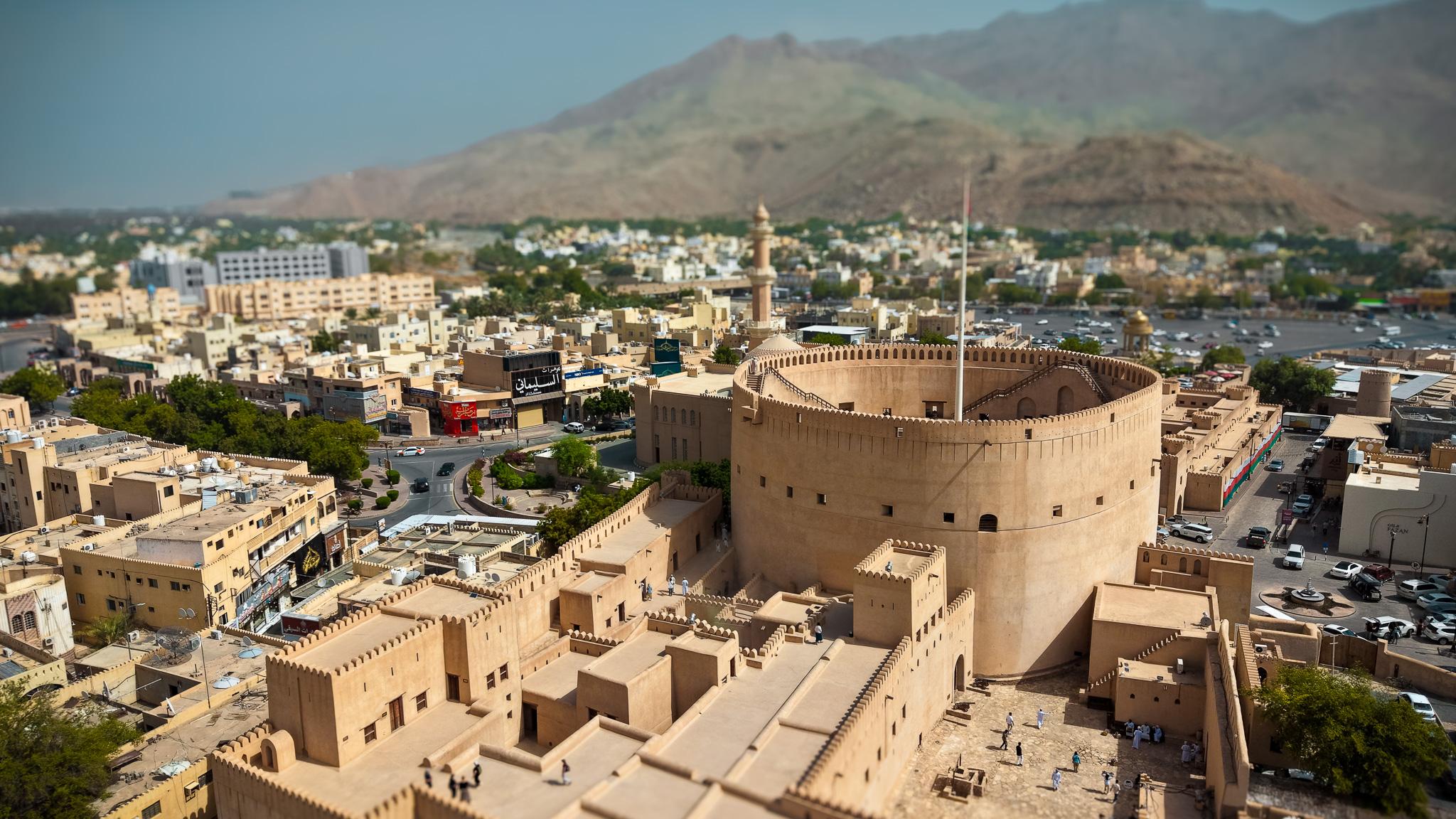
A historic fortification featuring a large circular tower.
An ancient mud-brick fort protected as a UNESCO heritage site.
A mountain village with traditional irrigation systems.
Flexible, no hidden fees.
As this is a free-access mountain area, no tickets are required for a day trip from nizwa to jebel shams. Private tour operators typically offer full refunds for cancellations made 24 hours in advance.
Hand-picked options within walking distance — pick a district for vibe, or a specific hotel for convenience.
High-altitude accommodation near the main canyon rim.
Sustainable mountain lodging offering tented experiences.
Various options located in the city center for a day trip from nizwa to jebel shams.
Jebel Shams rises 3,009 metres above sea level, the highest peak in Oman and the sentinel of the Al Hajar range. Its name translates as Mountain of the Sun, earned not through mythology but through the simple physics of first light: dawn strikes its limestone cliffs minutes before it reaches the settlements below. The approach from Nizwa crosses 150 kilometres of graded track, asphalt yielding to gravel at the 1,800-metre contour, where the air thins and the vegetation retreats to juniper and wild olive. The mountain anchors the western Hajar, a fold-thrust belt that began forming 70 million years ago when the Arabian Plate collided with Eurasia, forcing oceanic crust upward into serrated ridges that now cleave the interior of the sultanate. The road from Nizwa climbs through terraced villages—Wadi Ghul, Al Khitaym—where falaj channels still thread water from the plateau to date palms and wheat plots. These settlements predate the Omani imamate, their stone towers and communal threshing floors evidence of highland subsistence that required no contact with the coast. The track itself was completed in the 1990s, replacing the donkey paths that connected the summit to the souq towns. Before the road, Jebel Shams remained the domain of herders and seasonal harvesters; after it, the rim became accessible to anyone willing to endure two hours of switchbacks. Wadi Ghul, the so-called Grand Canyon of Arabia, cuts a thousand-metre gash into the mountain's northern flank. The canyon formed through millennia of erosion, water carving through Cretaceous limestone to expose strata that record the subsidence of an ancient seabed. The rim trail—Balcony Walk—follows a decommissioned irrigation channel along the cliff face, a flat traverse that offers unguarded views into the void. The path was built by hand in the pre-mechanised era, its gradient calibrated for barefoot passage and donkey loads. Today it serves hikers rather than farmers, but its engineering remains intact: no handrail, no signage, only the stone footing and the drop. From the summit plateau, the view extends across the Hajar interior to the Rub al Khali haze in the west and the Gulf of Oman shimmer in the east. Military restrictions close the uppermost radar station to civilians, but the public viewpoint at 2,900 metres provides sufficient elevation to observe the mountain's role as a hydrological divide: rain that falls on the northern slope drains toward Rustaq and the Batinah coast; rain on the southern slope feeds the wadis that flow inland toward the Empty Quarter. The mountain operates as Oman's climatic hinge, a place where altitude and geography converge to create microclimates that sustain relic ecosystems found nowhere else in the Arabian Peninsula.
"Dawn strikes its limestone cliffs minutes before it reaches the settlements below."
A step-by-step walkthrough of the visit — what you'll see, how long each stage takes, and the details that matter.
You depart Nizwa before the souq crowds gather, the 4x4 loaded with water and a driver who knows the gravel sections by feel. The first hour rolls through date plantations and falaj-fed farms, the road flat and paved until you reach the base of the escarpment. Then the climb begins: twenty switchbacks in quick succession, each hairpin tighter than the last, the elevation gain visible in the rearview mirror as the plains shrink below. At 2,000 metres the juniper appears, twisted and low, clinging to crevices where rainwater pools. The air cools ten degrees from the valley floor. You pass through Al Khitaym, a stone village empty at midday, its watch tower silent above terraced fields. The driver shifts into low gear for the final ascent, the track narrowing to a single lane with blind corners and no guardrail. Oncoming vehicles negotiate passage at the widest points, reversing in tandem until one can squeeze past. The rim viewpoint opens without warning: a pull-off, a scattering of rocks arranged as a low wall, and beyond it the drop into Wadi Ghul. You step to the edge and the canyon reveals itself in layers—beige limestone, rust-coloured shale, shadow pooling in the deepest cleft. The Balcony Walk trailhead lies a kilometre west, marked only by a gap in the ridgeline. You follow it on foot, the path no wider than your shoulders, the cliff face on your left and the abyss on your right, each step deliberate until the trail curves into the mountain's flank and the view shifts from vertical to infinite.
The mountain area is open 00:00–23:59 every day, allowing flexibility for your visit.
Yes, the Jebel Shams area is accessible by road, but the terrain requires a 4WD vehicle.
There is 0 OMR entrance fee for the mountain area as no official gate or ticket is required.
Yes, the area is open year-round, and the higher altitude makes it cooler than Nizwa city.
Pack water, sunscreen, sturdy footwear, and a camera for your day trip from nizwa to jebel shams.
Yes, a 4WD vehicle is essential for the steep climb on a day trip from nizwa to jebel shams.
Dining is very limited, so bring your own food and water for a day trip from nizwa to jebel shams.
The best arrival window is 06:00–09:00 to enjoy the morning light and cooler temperatures.
Yes, children can join, but ensure they are supervised due to the rugged cliffs at Jebel Shams.